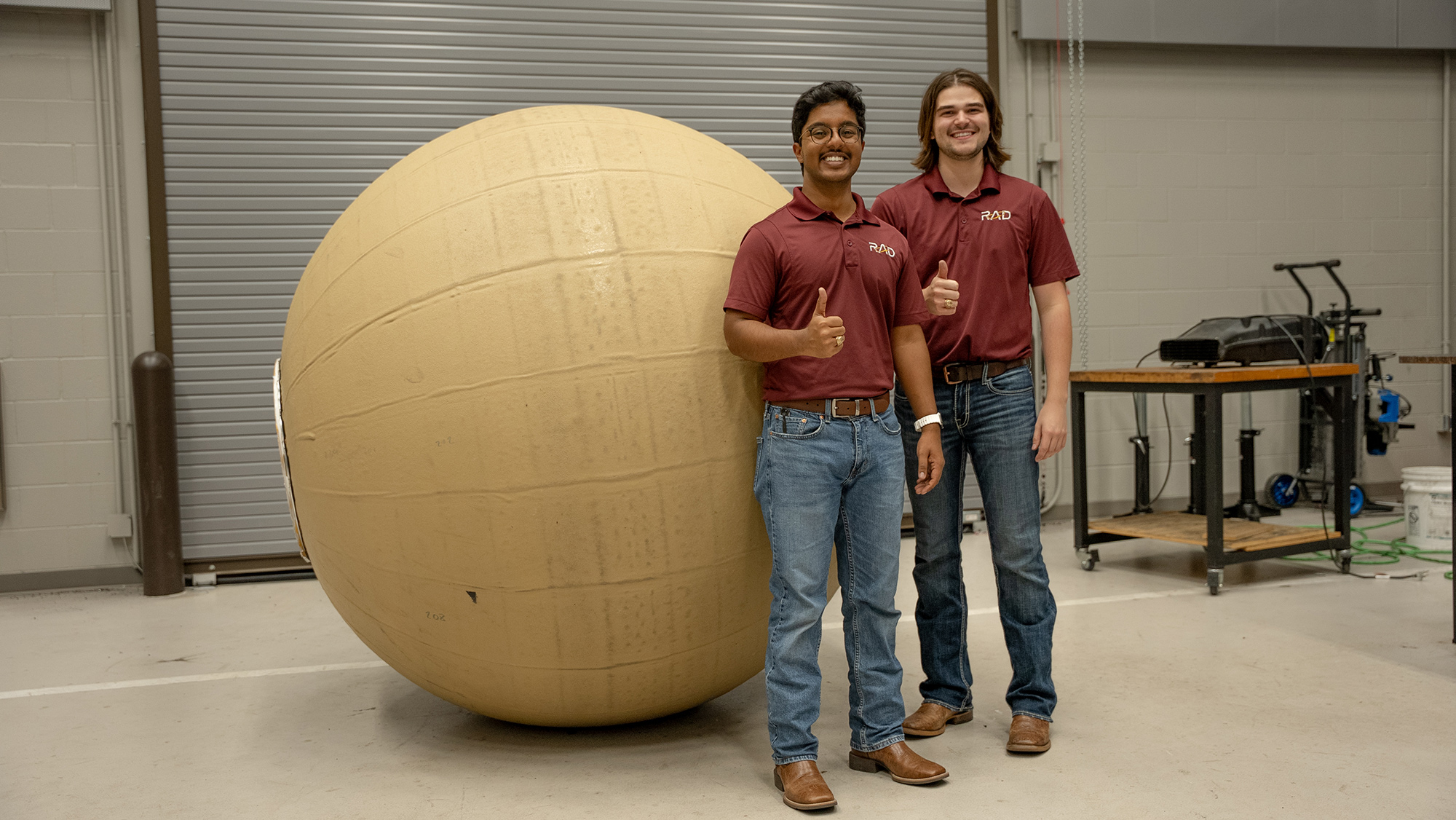

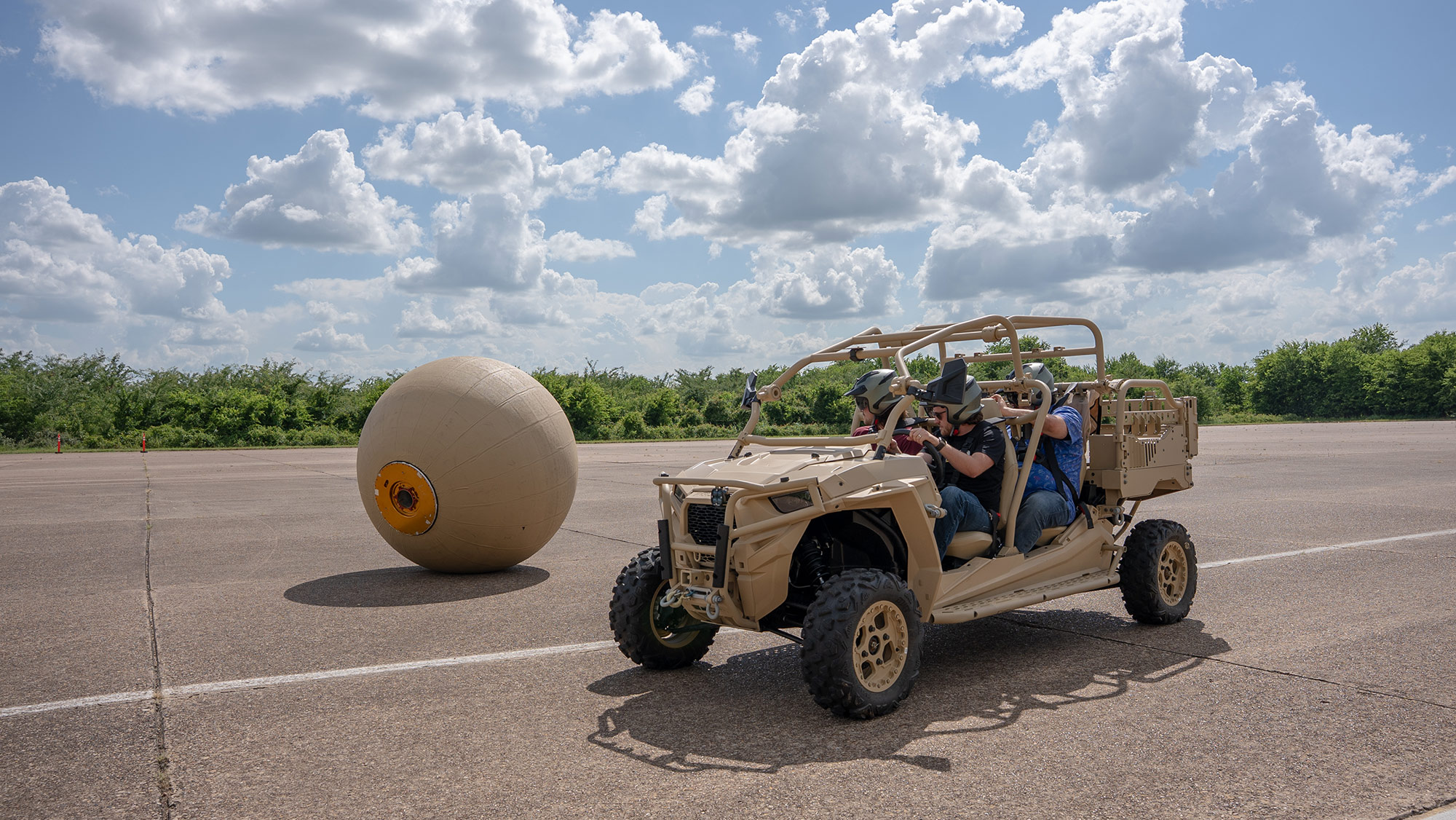
From the minds at the Robotics and Automation Lab, led by Dr. Robert Ambrose, comes the novel RoboBall — a spherical robot designed to go where legged or wheeled robots cannot. Thanks to its shape, RoboBall cannot flip over, allowing it access to unexplored lunar craters and uneven dunes of remote deserts.
The most recent version, RoboBall III, has a diameter of 6 feet, creating room for payloads with a variety of applications ranging from terrain mapping to sample collection. RoboBall’s design also makes it amphibious. The ability to go from water to land and back again makes it ideal for collecting essential data and even searching for survivors in flooded areas.
Whether by land, sea or space, RoboBall is rolling toward a bright future.
We get to work as actual engineers doing engineering tasks. This research teaches us things beyond what we read in textbooks. It really is the best of both worlds.
The autonomy Rishi and Derek have is exactly what a project like this needs,” he said. “They’re not just following instructions — they’re inventing the next generation of exploration tools.