
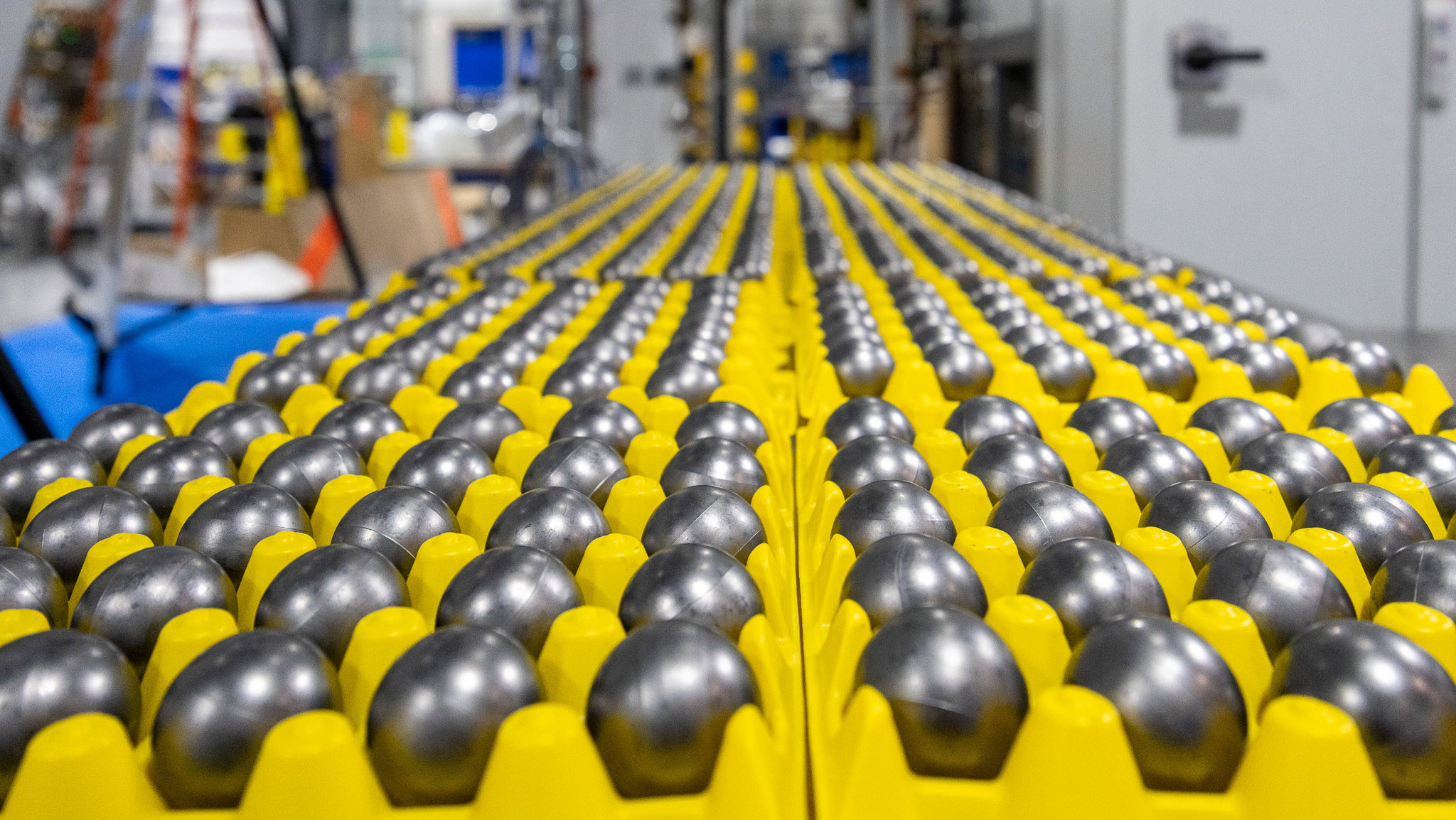
Nuclear energy design, engineering and manufacturing company Kairos Power is partnering with Texas A&M Engineering Experiment Station (TEES) researchers to analyze the fuel manufacturing process. The research will enable the company to implement nuclear safeguard system designs that will benefit both Kairos Power and the larger advanced reactor industry.
Kairos Power’s mission is to enable the world’s transition to clean energy while improving quality of life and protecting the environment. To achieve this mission, the company is commercializing a clean baseload energy solution — its fluoride salt-cooled high-temperature reactor (KP-FHR) — which can deploy safely at an affordable cost. KP-FHR is among the new generation of advanced nuclear reactors using high-assay low-enriched uranium (HALEU) tri-structural isotropic (TRISO) fuel.
The partnership with TEES came after Kairos Power identified a unique opportunity to partner with Dr. Man-sung Yim, nuclear engineering professor and director of the Nuclear Security Science and Policy Institute.
“Kairos Power is developing a robust strategy to safely and securely produce HALEU TRISO fuel for advanced reactors to enable widespread deployment,” said Chief Technology Officer and Co-Founder Edward Blandford. “This means establishing methods to ensure fuel is responsibly accounted for during every step of the manufacturing process.”
Committed to leading advanced nuclear technology, Texas A&M University is home to the nation’s largest nuclear engineering program with the initiative to provide an exceptional, hands-on learning experience by hosting small modular reactors (SMR) on campus.

“HALEU enables smaller, more powerful, and more efficient reactor designs with longer operating cycles. A reliable domestic supply of HALEU is considered essential for the U.S. to meet its clean energy goals and deploy new nuclear technologies,” Yim said. “But use of HALEU requires safeguards to prevent the material from being diverted for non-peaceful purposes. Students in this project will learn about domestic and international safeguard standards and regulatory frameworks for the use of HALEU fuel. They will also gain hands-on experience, applying comprehensive safeguard approaches to a HALEU fuel fabrication facility to minimize nuclear proliferation risk.”
The collaboration will be based at Kairos Power’s TRISO Development Lab in Albuquerque, N.M. The project will identify national and international safeguard requirements, develop methods and techniques for material control and accounting, and investigate the implementation of safeguard system designs to be applied at Los Alamos National Laboratory’s Low-Enriched Fuel Fabrication Facility, where Kairos Power will produce HALEU TRISO fuel for the Hermes demonstration reactor.
“The project team is pioneering the development of a new design framework for integrating safety, security and safeguards in advanced nuclear systems,” Yim said. “This will have a major impact on the future of nuclear engineering education by introducing and teaching dynamic and flexible design approaches to enhance the economics of SMRs and to support risk-informed licensing.”
The joint effort between Texas A&M researchers and Kairos Power will accelerate learning and innovation toward commercial deployment while allowing students to gain industry experience and contribute to the emerging field of advanced nuclear fuels.

Advanced reactors offer several advantages over conventional nuclear technologies, including enhanced safety characteristics, compact design, modular construction and lower capital costs. As demand for reliable and affordable carbon-free energy surges, advanced nuclear energy is poised to become a strategic national asset and will be an essential part of the clean energy mix in Texas and beyond.
“By partnering with Texas A&M, this program will develop engineers with expertise in HALEU TRISO fuel manufacturing, while enabling safe and secure fuel fabrication for our Hermes reactor deployment,” said Kairos Power Vice President of Fuels & Materials Micah Hackett. “The students in this program represent an important segment of the future nuclear workforce. Through this collaboration, we are preparing students for valuable contributions not only at Kairos Power, but elsewhere in the advanced reactor industry.”
Kairos Power — which originated from a university-led research effort — continues to engage with higher education, as reflected in its current partnerships with Texas A&M, the University of Tennessee and other institutions. They value the importance of partnerships between the private sector and university engineering programs, encouraging other companies to invest in engineering education.
“Kairos Power’s decision to endow this program reflects our broader strategic commitment to vertically integrate fuel fabrication, taking control of the supply chain for critical components to optimize on cost and reduce schedule risks,” Hackett added. “We look forward to leveraging Texas A&M’s unique capabilities and expertise to support the developmental stages in our fuels program, providing valuable contributions to enable future commercial fuel production.”
As a leading research university, Texas A&M can give its supporters access to cutting-edge knowledge and enhance their visibility with students and faculty. If your company or foundation is interested in supporting the College of Engineering or would like more information on how you can give, please contact one of our development officers.